Sunday, December 16, 2012

Final Project Pitch


Many people in this country are used to working long and grueling hours to make a living or while going to school and for many of us, it is both. Finding time for relaxing and enjoying ourselves is getting harder and harder to do. With as little time as we seem to have, we are neglecting some of the most important aspect of our lives: our families, our passions and our health. I would like to further elaborate on the health concerns in more detail because it is rapidly becoming more convenient to neglect. What if our government was more in tune with its people and no their output and efficiency? What I mean by this is the government could give us shorter work days and longer holidays. Would this fix the American health concern? No, it is still each citizen’s responsibility to govern their own health, though I firmly believe that this would grant us more freedom to pursue healthier lives. I’m not just talking nutrition here; I mean every facet of health, whether it is physically, mentally, emotionally or spiritually.
Shorter hours in a standard work day would allow for much more deserved freedom to do anything we need to become healthier. Even if days are shorter by just an hour or two, it gives us citizens time to allocate for other, more healthy activities, like cooking dinner instead of eating out, going to the gym instead of watching tv, spending time with our families or children instead of zoning out on the internet to unwind, and preparing meals for ourselves and children for the following day of work and school respectively, to name a few.
Longer holidays have already been implemented country-wide in most European countries. In America, we have 10 public holidays off, but a company is not required to give any others after that. Meanwhile, countries like England gets 8 public holidays and a minimum of 28 personal days for vacation. Most American corporations do allow for some vacation days, but in most cases, it restricted to only one to two weeks.


There are three main excuses given for vacation days going unused:
1. “I can’t afford it.” This is an EXCUSE. Most of these people who use this excuse have not put in the effort to actually find out how much money it would require to make the trip. The effort just simply isn’t there so of course they will assume that it isn’t affordable.
2. “I don’t schedule far enough in advance.” Another EXCUSE. This excuse only thrives off of the first, such that if they planned things in advance, they would be aware of the costs and find ways to make a trip or vacation affordable. People who use this excuse are obviously aware of the problem, so why wouldn’t they be able to solve it if they actually tried?
3. “Work is my life.” HUGE EXCUSE. Work becomes your life in one of two scenarios: you are doing what you truly love and don’t even really consider it work anyway or you make yourself work so much that you cannot differentiate between work and your personal life. This choice is based on a closed-minded thought process and with a plan, it can be relinquished.
The plan here is for us, as citizens of this country and people of this Earth, to take time for ourselves and not allow ourselves the day to day stresses of working so much a week. While petitioning the government would be great, for now we will narrow the focus to something more feasible that you can take immediate action on. Start small by planning out your day, each day of the week. If you know what hours you will be at work, you can deduce from there the time that it will take traveling back and forth and you will know approximately when your lunch period is and you can plan to make your own healthy lunch the night prior. Once you know which times you are obligated to be busy, ie, work, you can subtract your eight hours (give or take) of sleep and plan around it. With the remaining time, incorporate healthy objectives into your day. This can be before working, on your lunch break or after work. You’re looking for at least an hour a day of healthy activities that you can engage in, stimulating your physical, mental, emotional or spiritual health. If you don’t have time for all of those in a single day, which many of us don’t, try alternating them throughout the week. Monday, for example you can go to the gym after work, while Tuesday you can be a little more relaxed and read a book.
Unfortunately most people don’t plan out their days and they assume their day not to be long enough and give up and stop having a successful, productive, happy and healthy day. In order to ensure that your day is successful, I suggest a method that has been used for ages. Before each next day, you write a list of 7 things that you want to get done that day. Then you have to make sure that all 7 things become priority and complete them. In a traditional sense, this tool has been used for business success, but it can be used to promote your own healthy activities as well. In this 7-item list you can include work as a single item, but also include other activities that you know you want to have accomplished, even small ones like doing the dishes, but make sure you also includes things like preparing a healthy meal and spending time with your family. In the end, your mind and body is what sticks with you and if you allow all the other stresses into your life, then they will remain with you as well. So do yourself a favor, starting right now, and follow a path to becoming healthy.

Sunday, December 2, 2012

Intellectual Property Part II: The Fans

In my last post, I told you how Marvel and 20th Century Fox (among other film studios) are battling for intellectual property rights of comic book movie super heroes.

I know that Marvel studios owns that property; a piece of paper is not going to convince me otherwise. Just like a piece of paper doesn't always mean a couple should be married. I personally had a friend that went off to college that married his best friend's girlfriend (and all three of them were knowingly involved in this!) just to get financial aid benefit for school. Marvel is where these characters originated, where they were founded and believed in millions of comic book nerds globally.

My dilemma with this issue isn't even so much on the topic of intellectual property being stolen. What really bothers me is that Fox refuses to give up the licensing rights to these super heroes because they're only focused on maximizing their profits. Let's be honest, the X-Men movies were terrible, same with the Fantastic Four, and the other super hero movies they put out. The writing was sub par, and all they really passed for was summer action movies. But Fox sees how well Marvel has done with the Iron Man series, Thor, Captain America and the Avengers and they just won't loosen their grip. It's time to let go, Fox.

The reason Marvel Studios is doing so well with these movies isn't just because they know their way in and out of these characters, but that they put the show on for the fans. They add every little quirk of these characters without being overly cheesy or boring. They know how to do it right. The fans are the single most important selling point for these companies and without having Marvel's full line of heroes, the fans will never be fully appeased. Story lines like Civil War are an absolute must for comic book movies. On Bruce Lidl's website, Digitalwerks, he highlights that, "The Power of Spider-Man does not come, as J.K. Rowling might have it, merely from what the publisher puts out every month, but from the intense embrace fans give him, whether through a hand-made convention costume or through all the online discussions, wikipedia entries, fansites, etc." It's like the expression, "If a tree falls in the woods and no one is around to hear it, does it make a sound?" Spider-Man would have no impact if people weren't around to make him so popular. The more and more fans get together and discuss things like the back story, progression, artwork, design, psychology of characters and so on, the more a fan base is built. The fans are the foundation, and while Marvel sees that foundation and turns it into a memorial, Fox makes it a dirty pathway where fans are just walked on top of.

Marvel Studios and 20th Century Fox are in it for the same reasons, and yet, they can't come to any sort of reasonable conclusion. They could settle this so easily, and yet they choose to wage their very own
...Civil War


I know where I stand, do you?

Intellectual Property Part I: The Debate

It's 2012. Nearing close and closer to 2013. In this day and age, an idea can be considered worth more than any tangible object. Ideas have proven to be worth billions. Bill Gates created the personal computer. Steve Jobs created the iPod. Ideas revolutionize the way people live their lives, especially in the advanced civilizations we live in now. How are these ideas protected? An idea can't be held in your hand; one can only use their imagination to create and manifest their ideas into tangible objects, like Gates' personal computer and Jobs' iPod. Your intangible ideas can be preserved and your ideas do have exclusive rights. It is called intellectual property.

Intellectual property rights include things like copyright, trademarks and patents. According to Jonah Lehrer, in his book Imagine, it was in Shakespeare's time, around the 1580's that the concept of intellectual property really took off. It was was at this time, Lehrer says that people realized that "ideas have value."  Inventions, books, recipes and many things you use in your daily life are subject to intellectual property. Including comic books. Comic books, however, have a pretty difficult history with intellectual property.

Since comic books were first created in the 1960's, there has been much debate over who actually owns the intellectual property behind the heroes in comics. Is it the original creator(s)? The current writer(s)? The company that owns the comic? One of the biggest issues right now is the battle between Marvel (now owned by Disney) and 20th Century Fox, not for comic books, but rather for film.

Marvel's The Avengers

Before Marvel was bought by Disney, the company went through a few rough patches and in the process, sold the rights of several comic book super heroes in an attempt to make money. Fox now owns the rights to Daredevil, Silver Surfer, the Fantastic Four and many of the most famous X-Men. Marvel also licensed other characters to different studios, including Spider-Man and Ghost Rider to Sony and the Punisher to Lionsgate.

At first, this all sounded good in theory, but the tragedy behind it lies in the fact that Marvel cannot use these superheroes in their own movies so long as the rights are licensed to other companies. One of the biggest events in the Marvel universe occurred when a series called Civil War went into publication in 2006. Due to how successful the book series was, I can only assume that they would want to make a movie based on it. But the civil war is between almost all major Marvel super heroes, including the ones whose licenses are to other studios. I'm not alone on this assumption, either! Comicbookmovie.com user steveorjoe bases his entire lawyer-like argument around the fact that Marvel would certainly want to create Civil War into a live-action movie, especially since movies like Iron Man, Thor, Captain America and the Avengers did so well in the box office. He claims, "They would have to get the intellectual property rights back from these other studios before they could start production on such a major film without being sued by one of the other studios." Steveorjoe and I aren't the only ones who can see the issue in this. Thousands of comments are flooding webpages and forums on the internet of outraged fans.

So long as companies like Fox and Sony keep producing movies with these characters, they renew their licensing to use these characters. The latest Spider-Man movie that came out last summer, The Amazing Spider-Man starring Andrew Garfield and Emma Stone seemed to have relaunched the entire Spider-Man story all over again, even though Spider-Man 3 with Tobey Maguire was just released in 2007. Why? Well, some speculate it was to renew Sony's license for Spider-Man so they won't lose to to Marvel because comic book movies are such a huge box office success right now.

These legal battles will continue to rage on until Marvel regains their intellectual property, so for now, the war carries on... 

Thursday, November 15, 2012

Movies You Didn't Know Were Comic Books (Bonus/Extra Post)

According to popular movie database website IMDB, there are 2,351,010 movies and TV shows worldwide. Many of these films are actually adaptions from novels and short stories. This includes comic books. People are surprised by some of the films that were originally books. It's not uncommon that a movie based on another story goes by relatively unnoticed. There are a handful of comic book movies out there, and if you think you can guess a lot of them, you might be wrong.

It's easy to spot a comic book movie when it's based on super heroes like Superman, Spider-Man or the Avengers. But comics cover just as many genres as movies do: Science Fiction, Non-fiction, comics from the past, and those from the future.

#1 WANTED

 Even when the movie doesn't exactly follow the comic, the result can still be pretty entertaining. Most people don't know that the movie Wanted was originally based on the comic book.

The film, starring Angelina Jolie, James McAvoy and Morgan Freeman, depicts a frustrated office worker named Wesley (McAvoy) who is met by Fox (Jolie) and he is soon turned into a deadly assassin having inherited his father's superhuman abilities. Wesley finds that he can curve bullets and kill just about anyone he wants with absolute precision.


This is pretty different the original comic written by the infamous Mark Millar, also titled Wanted. Wesley is still at a dead end job, but when he meets Fox, he finds out she is part of a guild of superheroes and Wesley is one of them too, he just needs training. The original is based around actual superheroes and is much more vulgar, violent and gory, while the film maintains a PG-13 rating and focuses only on Wesley's ability as an assassin. Both the movie and the comic are pretty good in their own way.

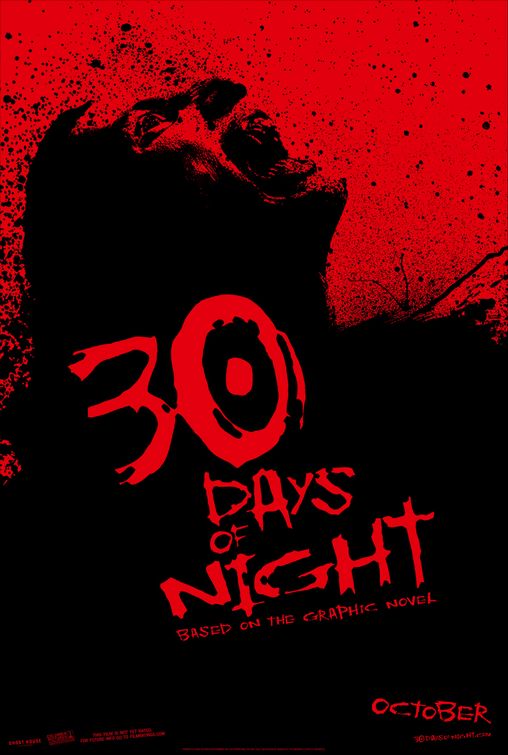
#2 30 Days of Night

Movie Poster
Comic Book Cover
The vampire thriller 30 Days of Night was both a comic book and a movie but the movie identically matched the comic book. The reason for this was that before it was a comic book, it was actually written as a script for a movie, but was rejected. Written by Steve Niles and illustrated by Ben Templesmith, 30 Days of Night is about a group of vampires that finds the ideal town for their nightly ritual. Barrow, Alaska has 30 days without sunshine allowing for a vampire feeding frenzy. This is a pretty great concept for a vampire movie considering the day time is the only time a human feels safe around a vampire, but now you have this uncomfortable claustrophobic feeling creeping in that refuses to leave. 

#3 The Mask


This is another one of those films that surely takes a different course than the comic book. The movie stars Jim Carrey and Cameron Diaz and filled with light-hearted humor and gag reels. Carrey's character is drawn to the mask as it totally changes who he is and gets him the things he want. The mood for the film is pretty mild in term of its violence and it has its moments for humor.


The comic book on the other hand is drastically different. The Mask was created by Mike Richardson and eventually made into comic form by John Arcudi and Doug Mahnke. The series goes through several different main characters as they are killed off. The mask turns its wearers into homicidal killers and the book is filled with violence and gore in a pretty gruesome sense. The tone in the book is very dark and not something you could show children, as you could with the film. Just by looking at the movie poster and the comic book cover, you might get a feel for how different the book and movie really are.

Reading reviews from other people between the movies and the comic book, there is generally a pretty clear line between whether they like the movie or the comic more, often times depending on whether they actually knew the comic existed at all. People who knew about the comic feel justified in that knowledge and claim the comic is better where as people who only enjoy the film claim that the film is better. When it really comes down to it, it doesn't even matter. People have a hard time appreciating these works art, good or bad, in the variety of mediums they come in. It's possible for both to be created well and for people to enjoy them separately or collaboratively. The war between book and film is created by those who are meant to enjoy it. It doesn't have to be a battle between which is better, when really that line should be erased and the two blended together seamlessly.

Read up and know your sources, it makes the movie-going and book-reading experience much more interesting!

*New* Wordle - Topic Change (+Summary)


Wordle - Movies You Didn't Know Were Comics

Many movies created today have been based on books and comic books alike. Many of the comic book movies are under-budgeted and flop, with the exception of more recent films. The movies that spawn from the original stories can be to the T, vastly different, or somewhere in the middle. Many people who have read the book before seeing the movie of almost any film often say that the book is better. This can be for many reasons, including changing or adding scenes, poor cast selection, and interpretation by the creators.

Many people would be surprised to find out which of these movies actually started out as comic books and seeing how they've changed. Some of the changes actually made for pretty decent films. Others were dreadful adaptions. Without knowing that a movie was based on another source of writing, a lot of credit is misplaced when a good film comes out. On the flip side, some decent stories have been made into pretty horrible movies, which give a bad name to the title of that comic book.

It's important to remember to give credit where credit is due, and a handful of movies were created based on comic books and people still have no idea, whether it was a good or bad adaption.

WORDLE + Summary


Wordle - Marvel vs Fox

Since Marvel has sold certain rights away like Spider-Man, certain X-Men and the Fantastic Four, they will be unable to produce movies for stories involving these characters that both Marvel and fans alike want to see happen. Until Fox sells those movie rights back, Marvel is limited in their movie production. It is unlikely that Fox will do so given the increased popularity in comic book movies. Fox, just like Marvel, wants to make as much money as possible.

I have not been a huge fan of Marvel due to the fact that creators do not own their stories, characters, etc., but I am in favor of Fox signing the character rights back over to Marvel. Ultimately, the success of comic book movies lies in the desire of the fans, and the fans demand that Marvel be able to produce the incredible stories they have already written!

Movies, stories, music... It's created to be shared, not to make as much money as possible. Marvel once owned the intellectual property to characters now owned by Fox (for movie production anyway) and without that ownership and because of Fox's gluttony, the fans suffer.

Tuesday, November 13, 2012

Are you a Nerd?

Nerd [nurd]
noun, Slang
1. a stupid, irritating, ineffectual, or unattractive person.
2. an intelligent but single-minded person obsessed with a nonsocial hobby or pursuit: a computer nerd.

This is the definition for a "nerd" as defined by Dictionary.com

Does this accurately display what it means to be a nerd? Does it even really narrow down what it means to be one? I've found that a lot of people around me these days, and not just random people on the street, but also my friends and family are calling themselves nerds. Not only are they giving themselves that title, but they're taking pride in it. What?! Being a nerd is something that has always been frowned upon and nerds are ostracized and cast out of society for their inability to be social and live normal lives!

Well, at least they used to be. The term nerd is technically slang and it has lost some bearing over the years as a solid definition. Being a nerd used to consist of activities like playing chess, reading comic books and playing computer games. Nerds would dedicate a lot of time to studying, wear unfashionable clothing and obsess in uncommon items, activities, and things in general that most people weren't very aware of. Nowadays, playing video games, reading comic books and having obscure taste in things is considered the cool thing to do.

Before, when being a nerd wasn't cool:
The typical wedgie: available in any bully's arsenal.

Now that being a nerd is cool:
Here we see Goku, Ash Catch'em and Ashitaka trip a
jock for being way too cool and talking to girls.

I blame the Internet.

And Hollywood.

The biggest problem nerds had when they were still social outcasts was that they were interested in things that not a whole lot of people around them were. But then the internet was invented. Suddenly there was a way for nerds to connect with fellow nerds across the planet. Over the years, people, and not just nerds, have been able to share their knowledge about everything that they are interested in. Social Media sites help people connect these interests that were once obscure, but now have amassed quite a following. Reading comic books is one of many types of interests that people have taking a liking to. When the movie industry realized how popular comic books were getting, they decided to put more effort into movies (technology sure helped too). Comic book movies used to be straight to video VHS, but now they're Hollywood's biggest summer blockbusters. As it turns out, comic books are pretty damn cool!

So where is the line drawn between nerd and non-nerd these days? No one really knows, but I say if you're going to be one, don't just throw on a Star Wars shirt and start watching Batman movies. You have to actually be interested in something and spend a lot of time involving yourself in that interest! Even popular things like sports and movies are starting to fall into the category of being nerdy when you see sportscasters who can shoot off statistics dating back to the 70's on the spot or even friends of yours with titles like "movie buffs." So I will repeat this one last time, if you want to become a nerd, don't just act the part to the general public, actually be one. Obsess in your interests!

If you are interested in becoming a comic book nerd in particular, this eHow sets up some general guidelines. I get the feeling that as an author she puts herself a little above the average nerd, but this is nonetheless a decent start.

Sunday, November 4, 2012

Open Question

Many of us think of stories in our heads that we would like to see written or made into a movie. This is because as we think about the nature of the story, we can picture how it will be played out on the big screen or how it can be written in the form of narration in dialogue to create a novel. What kind of story do you imagine being written in the form of a comic book/graphic novel? That is to say, a story written through both text and pictures in a sequential panel layout.

Tuesday, October 30, 2012

The Pros and Cons of Working for Large Comic Book Companies

I've talked a lot in this blog about why you should be creating your own comic books instead of trying to work your way into the larger comic book companies like Marvel and DC. Why would I suggest that when clearly these companies are the biggest brands that comics have to offer? They're big enough that they have Hollywood blockbuster movies, action figures, Halloween costumes, and every type of merchandise you can think of. There are certainly pros and cons to working for big companies like Marvel or DC.

Working for a big company like Marvel sounds great on paper, it really does. Many artists and writers struggle most of their lives to find work. They constantly chase it and just when things are going well, sales start to slow down and you're expected to revive it with the next big piece of art or story. When you're at Marvel, you have a regular 9-5 job and a steady paycheck. You don't have to worry as much about whether or not you'll have something to do the next day, because they tell you exactly what panels you will be drawing or what scene you need to be writing.

Another perk to working for these companies is that you're working with some of the best talent in the industry. The highest paid, most prestigious illustrators and writers in the business, all under the same roof. The amount of talent pool that you're drawing from is enormous. You get the chance to collaborate with these geniuses and at the same time, Marvel is the one paying for all your exposure. They will fund the comic's release, publishing, distribution, marketing and everything that goes into it.

This all sounds fine and dandy, but isn't one of the most important part about creating these comic books the fact that you're creating something that you get to call your own? When you sign a contract with companies like Marvel and DC, you are signing over everything that you make. Your characters, your stories, your artwork, it all belongs to them. They tell you what you can and cannot put into a story and they tell you what direction to take your story.

The contracts you sign for big comic book companies not only limit the work you do for their company, but completely restricts the work you do for other companies. A writer at DC is legally binded, and thus they cannot write for other companies like Marvel and Dark Horse. When you sign that contract, you make a deal to hand over everything you do and completely dedicate yourself to one company and one company only.

Marvel certainly takes away your freedom as a creator or owner of a comic and it forces you to make a decision: sacrifice the steady job for ownership within the underground comic scene or sacrifice that ownership for a chance to enter the world of mainstream comics. Ultimately, the decision is yours but when it boils down to it, I am a creator because I enjoy the freedom of being able to do whatever the hell I want with what I create. I can give it out for free or I can burn it, it doesn't matter but what's important is that the options are all available to me. They should be for you as well.

Thursday, October 11, 2012

Creating Your Own User-Owned Comic

It's the age of do it yourself, be it producing music or creating video games from scratch. As technology has advanced, many people are working on projects independently from home. Comic book creators are no exception to this shift in independence.

So let's say you're an aspiring comic book writer or artist, but you don't have the first clue on how to enter the industry. You know you have the talent and drive for it, but you don't know who to talk to or where to start. Robert Kirkman was in this same boat when he first started out as a comic book writer. His first published work was called Battle Pope, created in 2000 with his friend Tony Moore. Battle Pope was self-published under the Funk-O-Tron label. From Battle Pope, Kirkman began writing a mini series for Image Comics called SuperPatriot, which led to him meeting Cory Walker. Together, they pitched the idea of a super hero comic titled Invincible to Image and it was accepted in 2003. Image is the company that Kirkman still works for today and since joining, he has also become a partner to the business.

The basics for starting up your own comic are basically to have an idea, find people to work with you and help develop that idea, such as writers and artists, and then to get the comic out into the world. As far as the idea goes, it's completely up to you. With the increasing popularity of comic books, there is pretty much a comic for every genre. During a panel at the Los Angeles Festival of Books (below),

Kirkman gave advice to those entering the comic book world, "Try to make your book as original as possible, but not too weird. I mean, that's very important. Don't do something that's already on the racks. Nobody wants to read another story about a barbarian that's like Conan or a superhero that's like Spider-Man. You have to have some kind of hook."

Whether you have the idea yet or not, one of the biggest issues people have when they first start working on a comic book is finding what I will refer to as "the other half." Some folks have so much talent that they can writer their own stories and illustrate them. But for most people, you have one or the other. You can use websites to find artists like DeviantArt.com or a site that combines the community all in one, writers, artists and the like, such as PencilJack.com. Generally speaking, a comic book can be completed, start to finish, with just a writer and the artist. Often times there are more people that add to the mix to speed up the process and make deadlines, such as colorists and letterers. These sorts of people are used especially in bigger companies. Although, if you're limited with your on-hand staff, like many people who create user-owned comics, then you are likely to just have your writer and artist. 

Many people that create their own comics start up their own website or find publishers to print their work. This is definitely a good way to get your work out there, especially with comics being so reachable on the internet. This method requires a lot of effort and knowledge, such as knowing how to do web design (or paying someone to do it for you), finding a publisher and printing on your own dime, having the ability to market yourself and also just placing your comic in the right place at the right time. In the video above from the Los Angeles Festival of Books, Kirkman gave several very strong tips on how to pitch your comic book to an established company. His example was  with the company he is most familiar, Image Comics. He suggests that you pitch your comic in a very succinct manner; five pages of the actual comic and a one page synopsis. You want to make sure that the 5-pages of the comic aren't just the first five pages, but rather, the most crucial, most captivating or most important 5 pages that you can use to display how the comic will carry in its series. This is very important because just as Kirkman mentioned, everyone wants to find the next best comic, but no one actually wants to look for it.


So be sure to grab your other half, sit down and plan this all out in a very calculated manner as you plan to pitch your idea or start up an independent web comic. You want to establish yourselves in a very profound way that will set you apart from every other creator, writer or artist trying to squeeze their way in. Keep it original, but have fun. Work diligently, but work smart. Remember, comic books are a form of expression, just like music or dancing. Let your ideas bleed out onto the page, because this business, just like most things in life, is a risk. In the words of Anais Nin, "And the day came when the risk to remain tight in a bud was more painful than the risk it took to blossom." Put yourself out there or you will never know if you have the opportunity to become successful in the comic industry!

Monday, October 8, 2012

Putting the Pen to Paper

The Author & The Ink is a blog created to promote comic books and graphic novels created and published by independent developers. For the most part, this only excludes the "big two" in comic companies: Marvel and DC. The main focus of this blog will be to take a closer look at the writers and illustrators behind the comic books created independently or from independent companies. This will include an in-depth look at the work put in by both the writers and artists that create these books what it takes to meet deadlines and maintain your spot in this business.

Many authors and artists alike know deep down that they have the skill and knowledge to make great graphic novels, but it's a very tough field to get into. The lack of confidence can be overwhelming but it's those who dedicate themselves fully to their work that make it big in this industry. Author Robert Kirkman is a prime example. Kirkman started out writing independent stories for comics and eventually pitched one of his ideas to Image Comics. Since then, Kirkman released a comic book series called The Walking Dead, which is now a featured show on AMC that has much critically acclaimed success.

Robert Kirkman is definitely a hero to all of those aspiring comic book writers and illustrators who want nothing more than to share a brilliant idea with the world. The Author & The Ink will cover the rise of people like Kirkman as well as many others in their endeavors to become successful in the world of comics indie comics.

Robert Kirkman discussing his comic book Invincible, by Image Comics:
http://www.youtube.com/watch?v=i2TNAhdWK0I